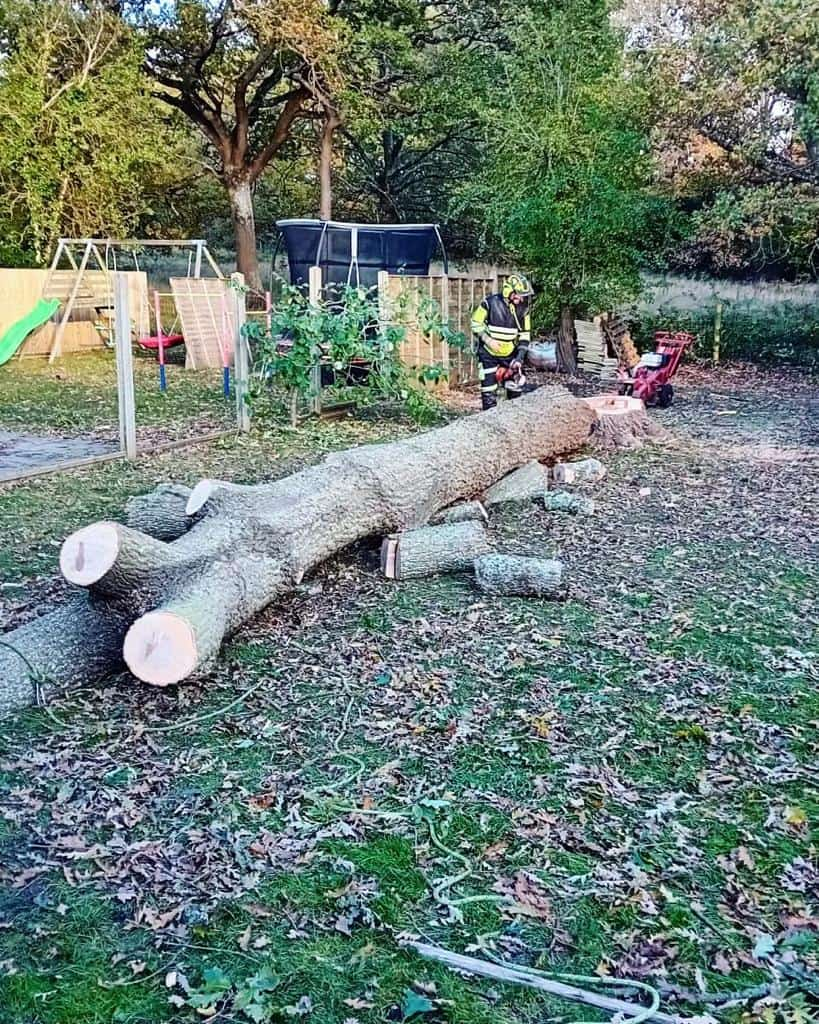
Removing a tree is far more complex than cutting through its trunk. The weight of the canopy, direction of lean, condition of the timber and available space all affect how the work should be planned. Even a tree that appears manageable from ground level can behave unpredictably once branches or sections of the stem are removed.
A professional tree surgeon can assess these factors before work begins and select a controlled removal method suited to the tree and its surroundings. This is particularly important where the tree stands close to a property, fence, access route or established garden.
Why Professional Tree Removal Is the Safer Approach
The Tree Must Be Properly Assessed
Before removing a tree, it is essential to understand its condition. Decay, cracks, dead branches, cavities and weakened unions can affect how the tree responds during cutting.
A tree may also carry its weight unevenly because of:
- A pronounced lean
- An unbalanced canopy
- Previous branch loss
- Multiple main stems
- Root movement or deterioration
- Heavy growth concentrated on one side
A tree surgeon will consider these characteristics when deciding how the tree should be dismantled. This prevents the removal from relying on assumptions about how branches or the trunk will fall.
Branches Are Heavier Than They Look
Large branches can weigh considerably more than their appearance suggests. Their shape and weight distribution may cause them to twist, swing or drop suddenly after a cut is made.
Trying to remove an entire branch in one section can create an uncontrolled load. Professional tree surgeons can reduce branches progressively, choosing suitable cutting points and managing each section before moving to the next.
This controlled approach is particularly valuable when there is limited open space beneath the canopy.
Felling Is Not Suitable for Every Tree
Straight felling involves bringing down the tree in one piece. It requires adequate space and a clear understanding of the tree’s balance, lean and surrounding conditions.
In many gardens, full felling is not appropriate because nearby structures or planting restrict the available drop zone. Sectional dismantling may therefore be required. This involves removing the crown and trunk in smaller, controlled pieces.
A tree surgeon can determine whether straight felling or sectional removal is suitable rather than using the same approach for every tree.
Specialist Equipment Provides Greater Control
Professional tree removal may require climbing systems, rigging ropes, lowering devices and specialist cutting equipment. These tools are used to manage heavy sections and control their movement.
Rigging can allow branches and pieces of timber to be lowered carefully instead of being allowed to fall freely. The equipment chosen must be appropriate for the weight, position and expected movement of each section.
Using specialist equipment effectively requires experience. It also depends on clear communication between the tree surgeon and the team working at ground level.
Nearby Property Must Be Considered
A tree does not need to touch a building to make removal challenging. Branches may extend over roofs, sheds, fences, paths or planted areas, while the trunk may lean towards a restricted part of the garden.
A planned removal should consider:
- The position of nearby structures
- The reach and spread of the canopy
- Safe locations for lowered timber
- Available access for workers and equipment
- The condition of surrounding ground
- Features beneath or beside the tree
This preparation helps ensure that branches and trunk sections are moved through the available space in a controlled manner.
Damaged Trees Can Be Unpredictable
Trees affected by decay, storm damage or structural weakness require particularly careful handling. Damaged wood may not support a climber or behave as expected when cut. A split stem can also move differently as its weight is reduced.
A tree surgeon can assess whether climbing is appropriate or whether another working method is needed. The removal sequence can then be planned around the weakest parts of the tree rather than placing unnecessary pressure on them.
The Order of Work Matters
Tree removal should follow a considered sequence. Removing the wrong branch first may alter the balance of the canopy or place additional strain on a damaged section.
Professional dismantling generally works methodically from the outer growth towards the main structure. The size of each section can be adjusted to suit the available lowering area and the condition of the tree.
Once the canopy has been removed, the trunk can be reduced in manageable sections. This systematic process provides far greater control than attempting to bring down large parts at once.
The Site Should Be Left Manageable
Safe removal includes more than cutting down the tree. Branches, timber and other debris must be processed and moved without causing unnecessary disruption to the surrounding garden.
The stump should also be considered. Depending on how the area will be used, leaving it in place may create an obstruction or allow unwanted shoots to develop. Stump grinding can be discussed as a separate stage where a clearer, more usable finish is required.
Why Experience Makes a Difference
Every tree presents a different combination of size, condition, balance and surroundings. Safe removal depends on identifying these factors and adapting the working method accordingly.
At Stansted Tree Surgeons, we assess the tree and the immediate site before recommending the most appropriate approach. Our aim is to complete each removal methodically while maintaining control throughout the work.
Conclusion
Professional tree removal requires careful assessment, suitable equipment and a planned sequence of work. A tree surgeon can identify structural weaknesses, manage heavy branches and dismantle the tree in controlled sections where space is restricted.
If you have a tree in Stansted, Essex, that may need to be removed, contact Stansted Tree Surgeons to arrange a professional assessment and discuss the safest, most suitable approach.
Call us on: 01279 744 790
Click here to find out more about Stansted Tree Surgeons
Click here to complete our contact form and see how we can help with your tree care needs.